Luxury Vinyl Plank (LVP) Flooring
Waterproof, wood-look flooring that holds up to real life.
Luxury vinyl plank is the most requested flooring we install in Brunswick and the greater Cleveland area — and for good reason. It reads as hardwood, survives water, and handles kids, dogs, and Ohio winters without complaint. Here's where it works, where it doesn't, and what a proper installation actually involves.
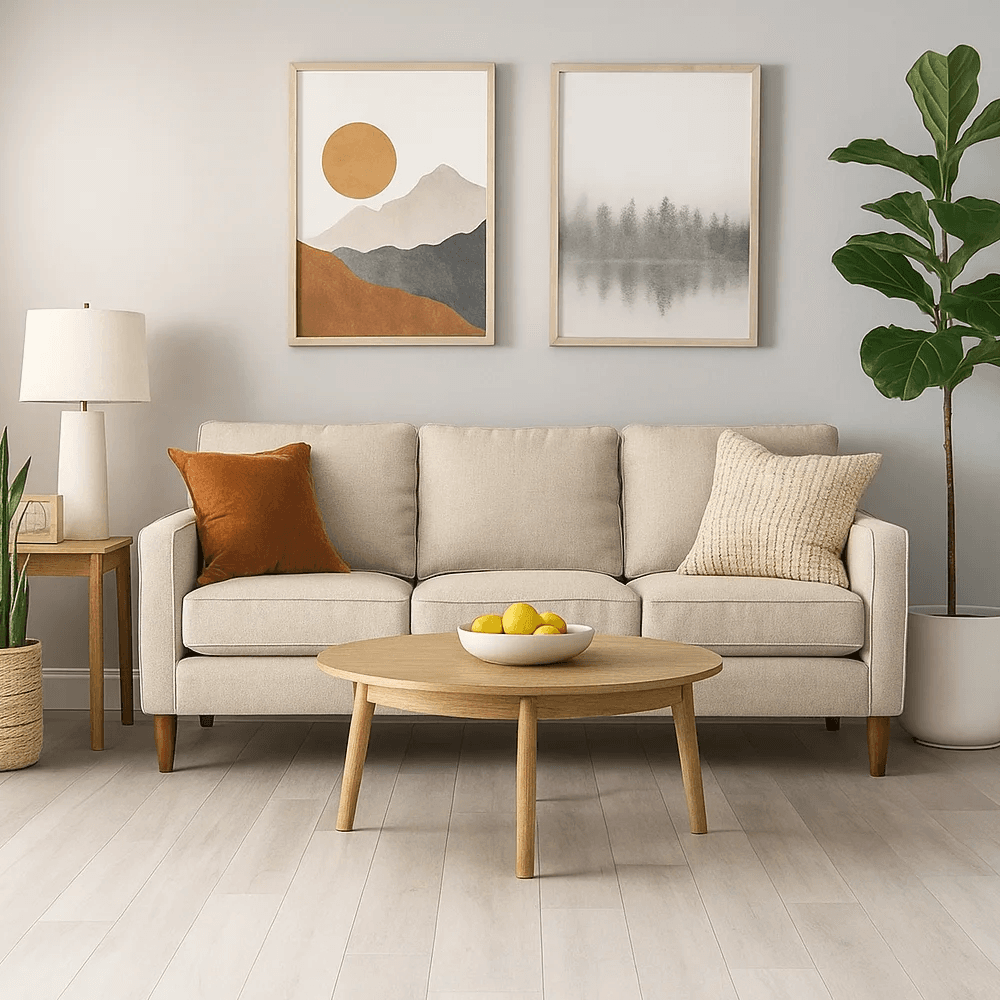
At a glance
- Water resistance
- Fully waterproof core
- Typical lifespan
- 15–25 years residential
- Relative cost
- $$ — mid-range
- Below-grade use
- Yes — basements included
- Refinishable
- No — replace planks instead
- Install method
- Click-lock floating or glue-down
✓Where it works best
- —Whole-home installations with one continuous floor
- —Kitchens, mudrooms, and laundry rooms
- —Finished basements and below-grade slabs
- —Homes with pets and young children
- —Rental and resale properties
!Where we’d steer you elsewhere
- —Rooms with direct, sustained sun where dark planks can expand
- —Buyers who specifically want the resale premium of real wood
- —Outdoor or unconditioned spaces like detached garages
What luxury vinyl plank actually is
Luxury vinyl plank is a multi-layer synthetic plank built around a rigid waterproof core, topped with a high-resolution photographic layer that reproduces wood grain, and sealed with a clear wear layer that takes all the abuse. The wear layer is the number that matters most: measured in mils, it determines how long the floor keeps looking new. A 6-mil wear layer is builder-grade and belongs in a low-traffic guest room. For a family home in Brunswick or Strongsville, 12 to 20 mil is the range worth paying for.
Most LVP sold today is either SPC (stone plastic composite) or WPC (wood plastic composite). SPC has a denser, harder core — it resists denting from furniture legs and telegraphs less over minor subfloor imperfections. WPC is thicker and softer underfoot, which feels warmer and quieter but dents more easily under a piano leg or a refrigerator. Neither is universally better; the right call depends on the room and how the space gets used.
Why it dominates Northeast Ohio homes
Ohio homes put flooring through a specific kind of stress. Winter means salt, slush, and boots tracked through an entryway for four months. Spring means humidity swings that make solid wood expand and contract. And a large share of housing stock in Medina and Cuyahoga counties has a finished or half-finished basement sitting on a concrete slab — a place solid hardwood simply cannot go.
LVP answers all three. The waterproof core means standing water from a boot tray or an overflowing washer does not swell the plank the way it would swell laminate or wood. It is dimensionally stable across the humidity range a Cleveland-area house sees between February and July. And because it does not care about moisture from below the way organic materials do, it is a legitimate below-grade option — provided the slab is tested and prepped correctly first.
The one thing that ruins an LVP floor
Rigid-core LVP is unforgiving about flatness. Because a floating floor is not fastened down, it bridges any dip in the subfloor instead of following it. Walk across that spot and the plank flexes; do it a few thousand times and the click-lock joint works itself loose, opens a seam, and starts to make a hollow tapping sound. That is the single most common LVP failure we get called out to repair, and it is almost never the plank's fault.
Manufacturers generally require the subfloor to be flat within 3/16 inch over a 10-foot span. Most existing subfloors do not meet that without work — an older plywood floor has settled, a basement slab has a low spot near the drain. We measure this before quoting, and any leveling, subfloor repair, or moisture barrier the floor needs is assessed on-site and priced separately from installation, so you see exactly what you are paying for and approve it before we start.
Installation: floating vs. glue-down
A floating install clicks plank to plank and rests on the subfloor, with a required expansion gap around the entire perimeter. It goes down faster, tolerates minor subfloor moisture better, and individual planks can be pulled up and replaced later. The expansion gap has to be covered — that is what shoe molding or quarter round is for, and it is why we recommend it on essentially every floating floor.
A glue-down install bonds each plank directly to the subfloor. It is the better choice for very large open spans, commercial traffic, and rooms with heavy rolling loads, because nothing moves. It also demands a flatter, cleaner substrate and takes longer. For most residential projects we install floating LVP; we will tell you when your space is a glue-down candidate rather than defaulting to whichever is easier.
What it costs and what drives the number
Our current LVP packages start at $3.99 per square foot, covering material and professional installation across a curated selection of styles. Above that, price moves with wear-layer thickness, plank width, and whether you want an attached underlayment or an upgraded acoustic pad underneath.
What that per-square-foot number does not include is floor preparation. Leveling compound, subfloor repairs, and moisture barriers are quoted separately after we walk the space, because there is no honest way to price them sight-unseen. An installer who gives you one flat all-in number over the phone is either padding it heavily or planning to skip prep your floor needs.
Living with it
Day-to-day care is a dust mop and a damp mop with a pH-neutral cleaner. Skip steam mops entirely — forcing hot vapor into the seams is one of the few things that will genuinely damage a vinyl floor. Felt pads under furniture legs and a walk-off mat at every exterior door handle most of the rest.
LVP cannot be refinished. When a plank gets gouged deeply enough to cut through the wear layer, the fix is replacement rather than sanding. That is why we tell clients to keep a box of leftover material from the original run: dye lots shift, and a plank from the same lot is an invisible repair while a plank from next year's production is a visible patch.
Common questions about luxury vinyl plank
Can luxury vinyl plank go in a basement?
Yes — it's one of the few flooring types that genuinely belongs below grade. The core is waterproof and dimensionally stable. What still needs checking is the slab itself: we test for moisture and flatness first, and any moisture barrier or leveling work is quoted separately before installation.
Is LVP better than laminate?
For anywhere water can reach — kitchens, bathrooms, basements, entryways — yes, clearly. Laminate has a fiberboard core that swells permanently once water gets into a seam. In a dry bedroom or living room the gap narrows considerably, and a good laminate can outperform a cheap vinyl on scratch resistance.
Will heavy furniture dent it?
SPC-core LVP resists denting well; softer WPC-core products are more susceptible. Either way, use wide felt pads or furniture cups under concentrated point loads — a narrow metal leg carrying a full bookcase is the usual culprit.
How long does an LVP installation take?
A standard room is typically 1–2 days. Whole-home projects usually run 3–5 days depending on square footage, stairs, and whether subfloor prep is required. Prep work, when needed, adds cure time before installation can begin.
See luxury vinyl plank in your own room.
Upload a photo of your space and preview this flooring type with our free AI visualizer — then request an itemized estimate with no obligation.
Every quote is itemized. Floor preparation — leveling, subfloor repairs, moisture barriers — is assessed on-site and priced separately, with your approval before any work begins.