Staircase Renovation: Matching LVP Treads and Risers to Your New Floor
A mismatched staircase is the most common thing that gives away a partial flooring renovation. Here's how a proper staircase-to-floor transition is done.
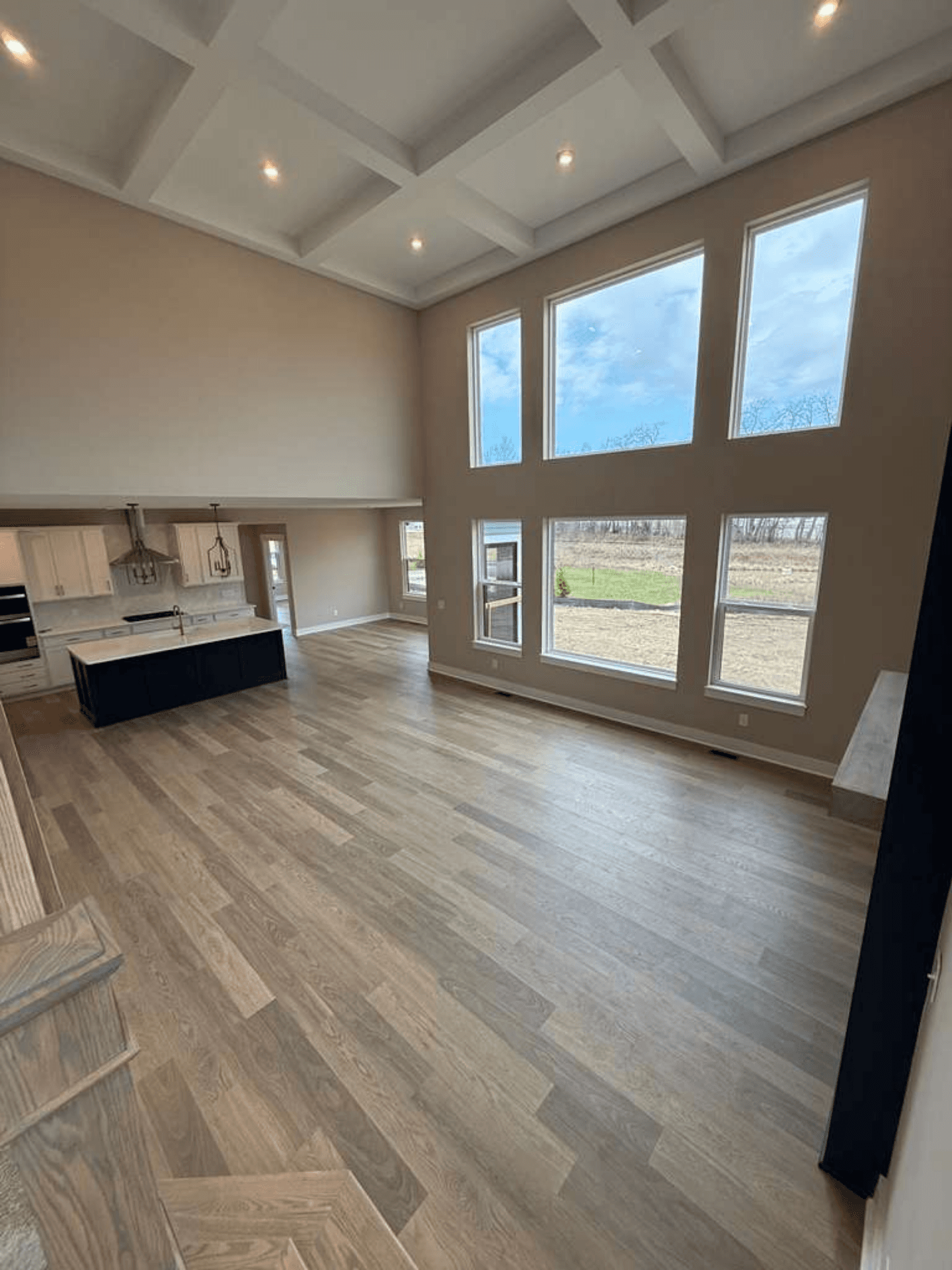
Why staircases get overlooked
When homeowners budget for new flooring, the staircase is often an afterthought — or skipped entirely because it seems like a separate, more complicated job. The result is a first floor with beautiful new LVP that stops abruptly at a worn carpet or mismatched hardwood staircase. It's one of the most common things we're asked to fix after another contractor's partial renovation.
What a proper staircase-to-floor transition involves
Matching treads and risers to your new floor requires precise measurement of each step (they're rarely perfectly uniform in an older home), selecting a tread profile that handles foot traffic safely, and finishing the transition where the staircase meets the new floor cleanly — no visible seams or height mismatches.
In a recent Strongsville project, we combined a full first-floor LVP installation with a complete staircase refinish, including leveling two areas of subfloor that were out of tolerance before the new flooring went down. You can see the finished result in our project gallery.
Plan the staircase and the floor together
If you're planning a flooring renovation, get the staircase quoted alongside it from the start — not as an afterthought. It's easier to match materials, coordinate the installation timeline, and avoid a visible seam between old and new when both are planned as one project.
Related services
See it before you commit.
Upload a photo of your room and preview this flooring style with our free AI visualizer.